
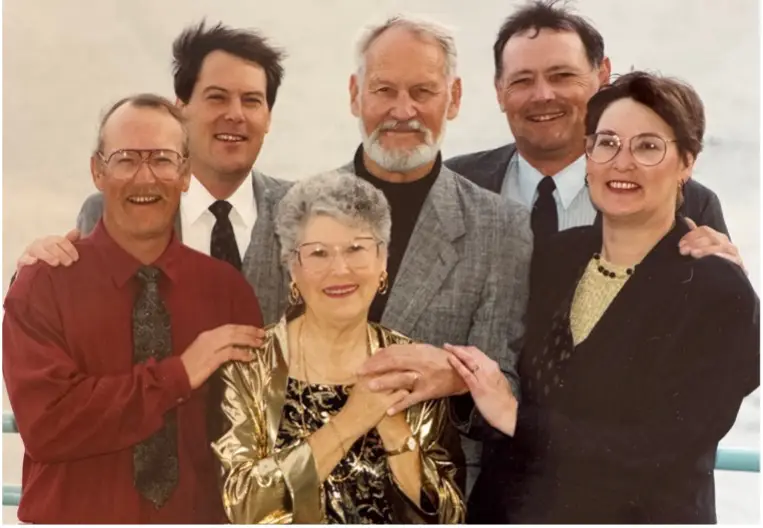
Exeter’s premier historian, Joe Doctor, interviewed dozens of pioneer citizens in the 1930s, ’40s, and ’50s, capturing firsthand accounts of Tulare County’s earliest years. Those interviews provided rich material for his many articles on local history. In a small way, I have tried to emulate that process by interviewing a number of Exeter’s senior residents, including Fran. Those interviews are preserved on our website:
https://cach-exeter.org/cache-videos/
I recently met with Fran again to explore additional memories of her years at Exeter Union High School (1935–1939) and of daily life in Exeter during that era. She was a student when the high school expanded south of Rocky Hill Drive, adding the football field, baseball field, and the tunnel beneath Rocky Hill Drive—changes that symbolized Exeter’s growth and optimism during the Depression years.
Although I had planned to share the Merryman story this month, I postponed it to make room for Fran’s story. In six months, she will celebrate her 105th birthday. Remarkably, she has spent virtually all of those years in Exeter.
The Exeter of 1935, as described in the Exeter Land Directory of that year, proudly promoted the agricultural abundance of the region—grapes, citrus, and other fruits—and painted a picture of a thriving small town. This is the Exeter in which Fran was raised:
“Located in the center of such a rich and fertile region, it is obvious why 65 percent of the population of approximately 2,800 are happy homeowners. It is beautified by three parks, and water is supplied by the municipal system at a minimum rate of $1.25 a month. The dry, healthful climate has an average temperature of 72 degrees and an average rainfall of eight inches.
Two grammar schools and one high school offer the finest educational facilities, the school property being valued at $350,000. The community has 78 places of business, including two banks, one newspaper, one hospital, one theater, and three hotels. There are 11 churches, one service club, a splendid free library, and an active Chamber of Commerce.”
Fran’s father, Samuel M. Supinger, was one of five children born to Thomas F. Supinger and Harriet Reid Supinger in Virginia in 1888. When Sam was nine years old, his mother died, and his father later remarried, adding nine more children to the family. Most of this large extended family remained in Virginia, where Fran still has many relatives today.
In the mid-1910s, Sam Supinger moved to Exeter, California, where he met Ora May Wilson, who became Mrs. S. M. Supinger. They married in 1915 and purchased what would become the family home at 328 North C Street in March 1916—six months before their son Neil was born. Sam initially worked in farm labor but eventually found long-term employment in construction, spending many years at the Van Cleve Pipe Company. The Supingers remained in that North C Street home for the rest of their lives.
Fran was born on May 2, 1921, the third of four children. Her older brothers were Neil (1916–1948) and Vern (1918–2008), and her younger sister was Mary Louise—known to everyone as “Tiny” White (1925–2016). All have since passed.
Fran’s extended family network in Exeter was—and remains—extraordinary. Her mother, Ora, had four siblings, and over the years people often joked, “Don’t say anything bad about anyone in Exeter—Fran is probably related to them.” The Exeter Wilsons, Montgomerys, Hickeys, and many others all intersect with her family story.
After graduating from Exeter Union High School in June 1939, Fran attended business school in Fresno before returning home. She married Waldo Crosson while he was in flight training in New Mexico, shortly before his deployment to England as a B-17 bomber pilot. On his tenth mission over Germany, Waldo was shot down and injured, spending the remainder of World War II in a German prisoner-of-war camp.
During that long and agonizing period, Fran was caring for their infant son, Allen, while enduring months of uncertainty about her husband’s fate. She became the primary point of communication among the families of Waldo’s flight crew—an emotionally harrowing responsibility that she carried with quiet strength and grace. During the war she was heavily involved in the local Red Cross and spent many evenings on Rocky Hill spotting airplanes as part of the war effort.
When Waldo returned home in 1945, they resumed family life and welcomed three more children: Ron, Greg, and Jennifer. For the next 24 years, Fran devoted herself to supporting her children in every aspect of their lives—sports, school, church and community activities alike. She served for many years as the Secretary at the Methodist Church.
In the 1960s, as her children grew older, Fran began working at Security Pacific Bank on Pine Street. She earned a sterling reputation for integrity, precision, and professionalism. A master of shorthand, she was widely respected for her exceptional correspondence skills. Waldo passed away in 2002.
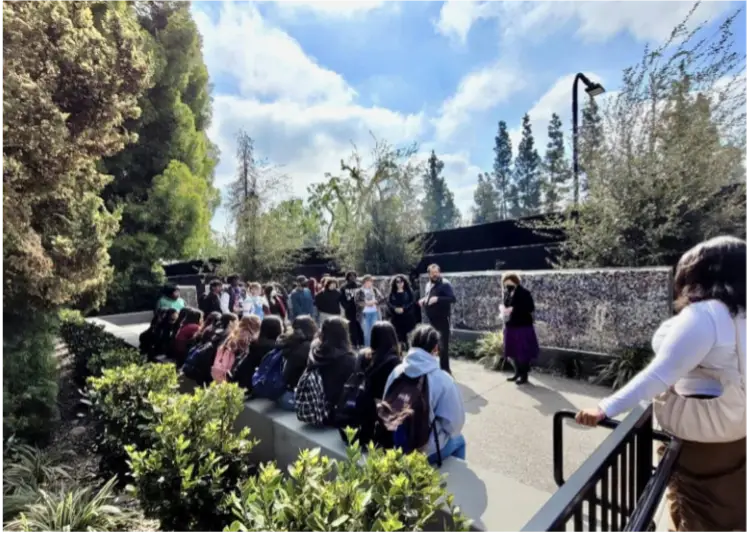
More recently, Fran participated with the Jewish synagogue in Visalia in support of a Holocaust memorial project. The goal was to collect six million buttons—each one representing a life lost during the Holocaust. Fran began gathering buttons from everyone she knew and, over many years, contributed an astonishing 600,000 buttons herself. The memorial was shifted to Bakersfield and dedicated at the synagogue in December 2022, with the wall of buttons standing as a powerful visual testament to remembrance and compassion.
At 104, Fran remains remarkable—still checking email and the daily news on her iPad and sending texts on her iPhone and regularly attending mahjong games with friends. I feel deeply honored to have heard even a small portion of her memories.
Keep it up, Fran. Exeter is better for having you!